





Wealth Management
The new wealth orchestrators: fluid lives call for an integrated plan
As Asia’s wealthy anticipate longer, multi-phased lives, the role of the wealth planner must evolve beyond investment manager to orchestrator of mobility, governance and continuity

Asia’s high-net-worth individuals (HNWIs) are living longer, more active lives. Many are preparing for a future in which their time and capital are spread across investments, roles and jurisdictions.
New research from Manulife* suggests this is changing what clients need from wealth planning. Siloed advice is no longer adequate. Financial consultants must now help families adapt fluidly across life stages, borders and generations.
"Many high-net-worth individuals in Asia have historically focused on savings or property rather than financial planning,” says Bonnie Qiu, CEO, Global High Net Worth at Manulife Asia. “They now recognise the value of taking a more holistic approach, diversifying portfolios and reviewing them continuously, because life changes."

65%
(rising to 69% in Singapore)
of HNWIs are developing backup plans
such as alternative residency or diversified tax exposure, in order to prepare for different scenarios
Fragmentation can cause
plans to fall apart
Rising complexity increases the need for more coordinated planning. But many families rely on several service providers operating in isolation, from private banks and wealth managers to lawyers and tax advisers.
“The challenge is not a lack of solutions, but the fragmentation of advice,” says Frank O’Neill, Chief Product Officer at Manulife Singapore.
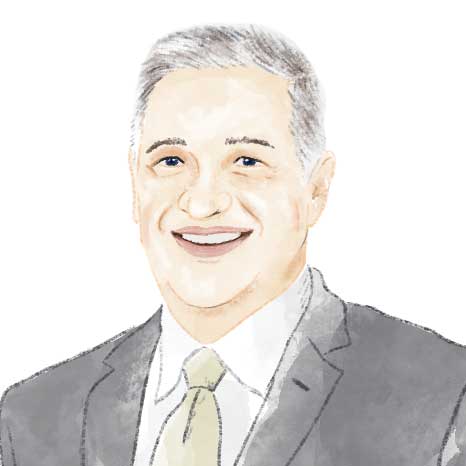
Frank O’Neill
Chief Product Officer, Manulife Singapore
The data shows how far there is to go. Only 17 per cent of HNWIs say they have a fully integrated wealth plan that spans investments, legal and tax planning, family governance, and succession. A further 32 per cent say their plan is only partially integrated.
The issue is also intergenerational. Only 24 per cent of HNWIs say the next generation is deeply involved in key decisions, a figure that decreases to 20% in Singapore. And as Asia approaches a major intergenerational wealth transfer, heirs who have not been gradually introduced to governance and decision-making may be poorly prepared to steward that legacy.
Bryan Goh, CEO of the Tsao family office, observes that governance planning is often neglected unless a family has practiced it over generations. "If there isn’t governance put in place by the people who have generated wealth, then there's a risk that it gets derailed,” he says.
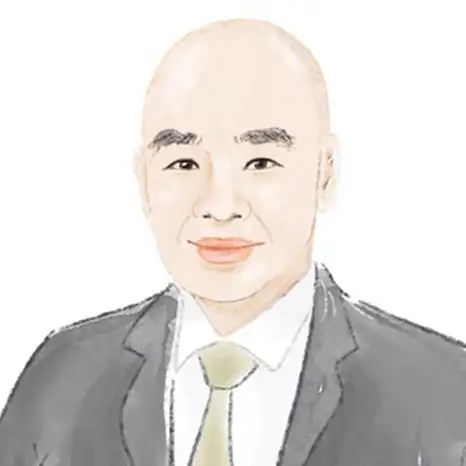
Bryan Goh
CEO of the Tsao family office
Such gaps can have practical consequences. Investment strategies may not reflect succession goals. Tax planning may not account for future residency choices.
Families appear to recognise the challenge. Seventy-two per cent (70% in Singapore) said they would benefit from a single trusted financial consultant coordinating different aspects of their wealth strategy. In other words, HNWIs want a single point of accountability to ensure different parts of the plan work and evolve together.
The financial consultant as orchestrator
The financial consultant’s role must expand to offer a single, coherent view of their client’s life, family and assets. The data clearly reflects this desire for orchestration. When selecting a financial consultant, 43 per cent expect personalised guidance that reflects their specific circumstances and goals, and 40 per cent expect a strong understanding of their financial situation across products and jurisdictions.
A significant portion of HNWIs (38 per cent) also want technology-enabled access to real-time portfolio and planning data. Of course, this does not replace human judgment, but rather raises the bar for digital fluency. “It’s not just about dashboards or modelling tools. Financial consultants need to turn data into real conversations with clients,” explains O’Neill.
In the age of multi-phased longevity, planning must be dynamic. As HNWIs’ interests become more international, wealth planners must act as orchestrators of fluidity, coordinating mobility, governance and business continuity across jurisdictions and generations.
*In April and May 2026, Manulife surveyed 1,000 High Net Worth / Mass Affluent Individuals based in Australia, China, Japan, India, Hong Kong, Malaysia, Singapore, South Korea, Taiwan, Thailand and the UAE to explore their wealth strategies. Respondents were aged between 18 and 80+ and had net worths ranging from $3mn to $50mn+.

